


Shipping!
Limited Time Only
Automatically Applied
Mainland UK delivery only

decking & cladding delivered to your door
shop by colour
SHOP BY SIZE
It is a fair question, and one most people ask before choosing decking for their garden. Composite decking is not completely slip proof, but in most cases it is less slippery than traditional timber, especially when it is installed properly and kept clean. Modern composite boards are designed with grip in mind, so they tend to handle wet conditions better than wood, which can become smooth and slick over time.
For UK gardens where rain, damp and fallen leaves are part of everyday life, this makes a noticeable difference. The surface of composite decking is more consistent and does not absorb water in the same way timber does, which helps reduce the risk of slipping. That said, like any outdoor surface, it still needs basic care to stay safe.
If you are comparing options, you can explore our full range of composite decking boards to see the different finishes and colours available.
Wet weather is where most concerns come from, and rightly so. Any decking can become slippery when water sits on the surface, but composite decking is generally designed to offer better grip than timber in these conditions.
The surface texture plays a big part here. Many composite boards include a lightly textured or woodgrain finish, which helps create grip. Grooved designs can also help water drain away rather than sitting on top of the board.
Timber decking, especially once it has weathered, can become smooth and polished over time. This is often what leads to that slippery feel after rain. Composite boards tend to hold their texture for longer, which is why they are often the more reliable option for everyday use.
Choosing the right board makes a difference. You can compare options such as grey composite decking or brown composite decking to see how different finishes look and feel.
Most of the time, it is not the material itself that causes slipping. It is what builds up on the surface.
Over time, timber decking is more likely to absorb moisture and encourage this build up. Composite decking does not absorb water in the same way, which makes it easier to keep clean and reduces the chances of algae taking hold.
Regular cleaning goes a long way in keeping any decking safe. If you are unsure where to start, our guide on how to clean composite decking explains how to keep boards in good condition without much effort.
In most cases, no. Composite decking is usually less slippery than wood, particularly over the long term.
Timber changes as it weathers. It can become smoother, softer in places and more prone to holding moisture. That combination is what often leads to slipping, especially in autumn and winter.
Composite decking is designed to stay more stable. The surface finish does not wear down in the same way, and the material itself is less affected by moisture. This helps maintain grip over time rather than losing it.
When people compare composite decking vs wood, safety in wet conditions is often one of the reasons they choose composite. It does not mean it will never be slippery, but it tends to be the more practical option for most gardens.
The least slippery composite decking usually comes down to the surface finish rather than the colour or size.
Boards with a textured or woodgrain finish tend to offer better grip than very smooth surfaces. This texture gives your feet something to hold onto, even when the boards are slightly damp.
Grooved boards can also help by encouraging water to run off rather than sit on the surface. Good installation matters here as well, as boards should be laid with a slight fall to allow water to drain away properly.
If you are unsure which finish is right for your space, ordering free samples is one of the easiest ways to compare them. Seeing and feeling the surface in person gives a much better idea than photos alone.
Winter conditions bring a different set of challenges. Frost and ice will make any outdoor surface slippery, including composite decking.
What composite does well is everything around those conditions. It is less likely to hold water, which means there is often less surface moisture to freeze in the first place. It also does not warp or crack in the same way timber can, so the surface stays more even.
Leaves and debris are more common in colder months, and these are often the real cause of slipping rather than the decking itself. Keeping the boards clear makes a noticeable difference.
During icy weather, it is always worth treating decking with the same care as any other outdoor surface. Good footwear and a bit of caution go a long way.
Keeping composite decking safe is mostly about simple maintenance and good setup rather than ongoing treatment.
Regular cleaning helps remove dirt, leaves and algae before they become a problem. A brush and some warm soapy water are usually enough for routine care. Pressure washing can be used occasionally if needed, but it should be done carefully.
Drainage is just as important. When installing decking, leaving a slight slope helps water run off rather than collect on the boards. Spacing between boards also allows airflow and prevents moisture building up.
Choosing the right board in the first place makes a difference too. Textured finishes and quality materials tend to perform better over time.
If you are planning a new deck, our composite decking installation guide can help you get the setup right from the start.
When safety is a priority, a few simple factors are worth paying attention to.
If you are still deciding, ordering free samples is one of the best ways to compare finishes and colours before committing.
Composite decking is not completely slip proof, but it is generally a safer and more practical option than traditional timber, especially in typical UK weather. The material is designed to handle moisture better, hold its texture and require less ongoing maintenance, which all contribute to better grip over time.
Keeping the surface clean, choosing the right finish and installing the boards properly will make the biggest difference. Once those basics are in place, composite decking tends to be a reliable choice for everyday use in a garden setting.
If you are thinking about upgrading your outdoor space, get in touch with our team today, you can call us on 01695 557711, email us info@modern-garden.co.uk or fill in our online contact form.
Composite decking can become slightly slippery when wet, but it is usually less slippery than timber thanks to its textured surface and lower water absorption.
Frost and ice can make any decking slippery, but composite boards are less likely to hold moisture, which can help reduce the risk.
It can if dirt, algae or debris build up, but regular cleaning helps maintain grip and keep the surface safe.
Boards with a textured or woodgrain finish tend to offer the best grip, especially when combined with proper drainage.
In most cases, no. Composite decking is generally less slippery than wood, particularly once timber has weathered.
Keep it clean, remove debris regularly and make sure water can drain away properly during installation.
Grooved boards can help with drainage, which reduces standing water and can improve grip in wet conditions.
Yes, when installed and maintained properly, composite decking provides a stable and consistent surface suitable for everyday use.
Recommended products

As the evenings draw in and temperatures start to drop, many of us are thinking about how to make the most of our gardens during the colder months. Outdoor space
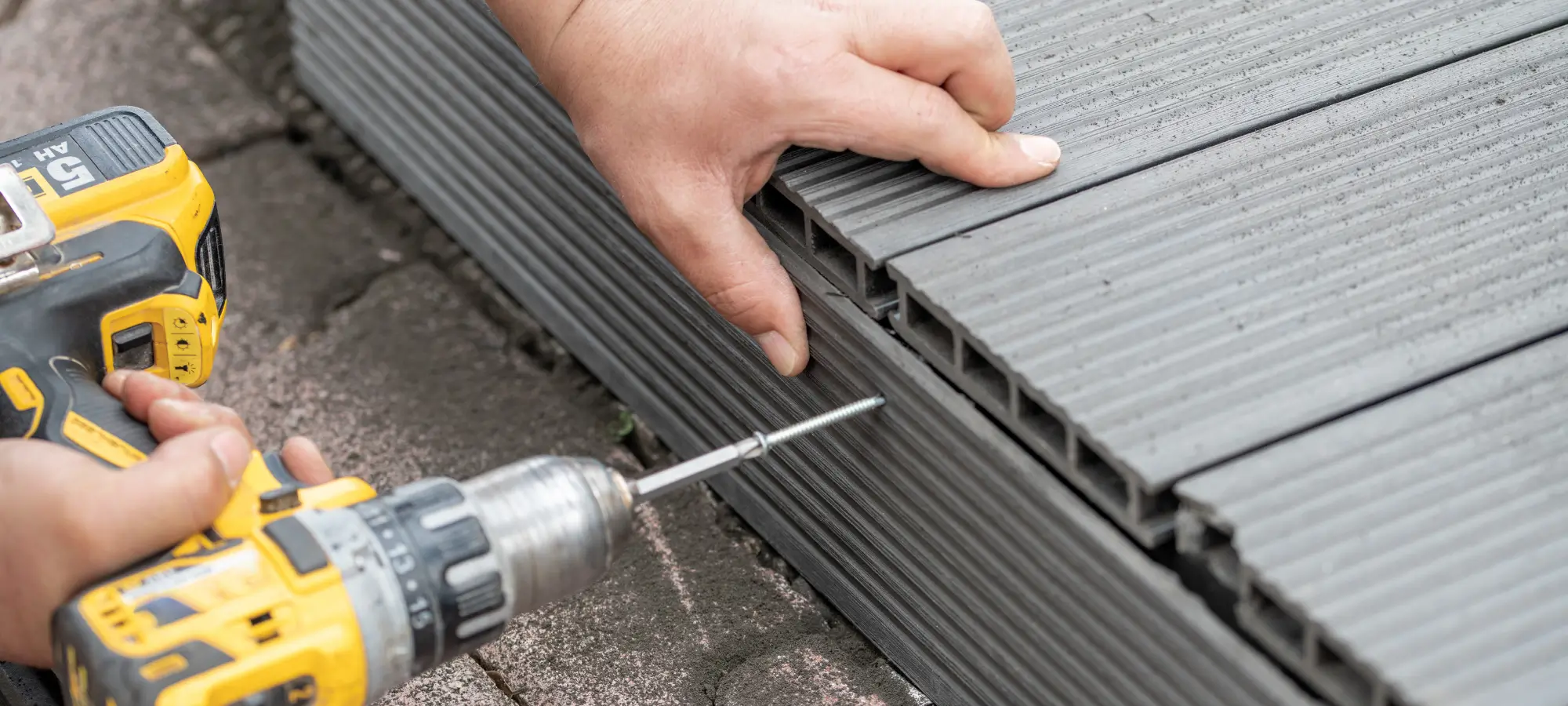
Waterproof composite decking is the ideal solution for UK homeowners who want a garden deck that can handle unpredictable weather. Rain, damp conditions and sudden showers are all part of

Composite decking brings a range of benefits to any garden or outdoor space. It’s stylish, durable, and low-maintenance. Unlike other decking materials, you don’t need to worry about sealing, staining,


