


Shipping!
Limited Time Only
Automatically Applied
Mainland UK delivery only

decking & cladding delivered to your door
shop by colour
SHOP BY SIZE
The Short Answer
Composite decking can last for 25 years or more, depending on the quality of the boards, how the deck is installed and how well it is looked after. Some premium composite products are designed for considerably longer service lives, although there is no single lifespan that applies to every deck.
For homeowners comparing composite with timber, lifespan is only part of the decision. The amount of maintenance required over those years also matters.
This guide looks at how long composite decking lasts, what can shorten its lifespan and what you can do to keep your decking in good condition.
Composite decking is manufactured using a combination of wood fibres and plastic. This gives you a decking board designed for outdoor use without the same routine painting, staining and sealing associated with timber.
Some products also have a protective outer layer, commonly described as capped composite decking. Construction varies between ranges, so the expected lifespan and performance should always be checked for the particular boards you are considering.
The decking boards themselves are only one part of the finished deck. The supporting structure, fixings and quality of the installation can all influence how it performs over time.
Two composite decks installed at the same time will not necessarily age in exactly the same way. Several factors can influence their condition over the years.
Different composite boards use different constructions and materials. Product quality should therefore be considered alongside price when comparing your options.
Correct spacing, suitable support and appropriate fixings all matter. Problems underneath the boards can affect the finished deck even if the composite itself remains in good condition.
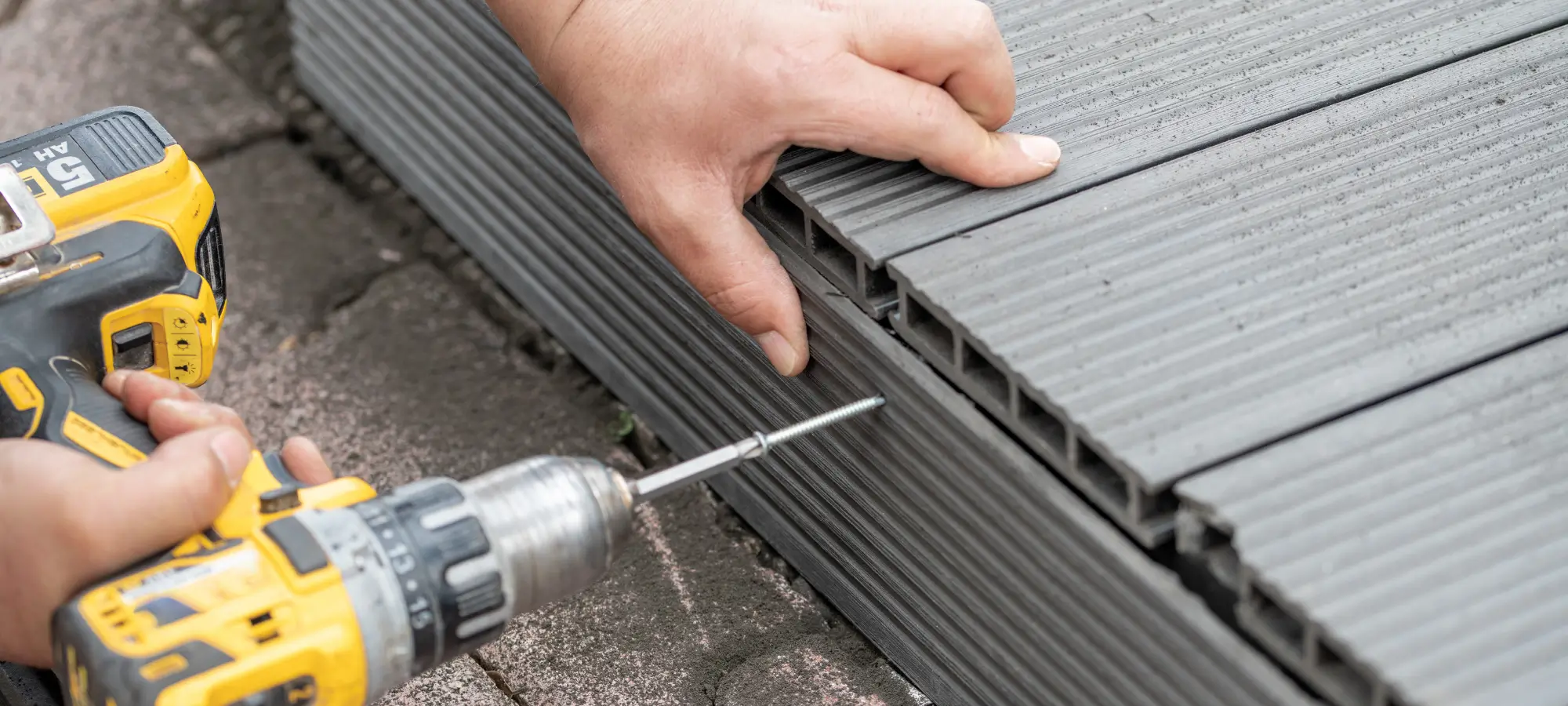
If you are planning the work yourself, our how to install composite decking guide explains the installation process in more detail.
An exposed deck may experience more direct sunlight, rainfall and general weathering than one in a sheltered part of the garden. Trees and surrounding planting can also lead to leaves and organic debris collecting on the boards.
A small seating area may experience less wear than decking used as a busy route between the house and garden. Furniture and general foot traffic can all contribute to wear over time.
Composite decking is low maintenance, but keeping it clean and checking for damage can help you identify small problems before they develop further.
25+ years
Good-quality boards, correctly installed and maintained
40 to 50 years
Estimates sometimes given for premium products
A good-quality composite deck can commonly provide around 25 years or more of use when correctly installed and maintained.
Longer estimates are sometimes given for premium composite products, including figures of 40 or even 50 years. These figures should be considered alongside the specification and warranty of the particular decking rather than treated as a guarantee for every composite board.
| Factor | How it can affect lifespan |
|---|---|
| Board quality | Better-quality products may be designed for a longer service life |
| Installation | Correct support, spacing and fixings help the decking perform as intended |
| Exposure | Sunlight, rain and surrounding vegetation affect the conditions the deck experiences |
| Maintenance | Cleaning and routine checks can help prevent avoidable problems |
| Usage | Heavier foot traffic and regular use can increase surface wear |
A lifespan estimate also does not mean the decking will look exactly the same throughout that period. Outdoor products naturally experience use and exposure as they age.
Checking the warranty supplied with a particular product can therefore give you more useful information than relying on a general lifespan figure for composite decking as a whole.
Composite and timber decking can both remain in use for many years, but they differ considerably in the maintenance they require.
| Composite decking | Timber decking |
|---|---|
| Does not require routine staining, painting or sealing | Usually requires periodic treatment |
| Composite boards do not rot like timber | Wood can be affected by rot if it is not adequately protected |
| Designed as a low-maintenance decking option | Maintenance requirements depend on the timber and treatment |
| Lifespan depends on product quality and installation | Lifespan varies considerably by timber species, treatment and upkeep |
A well-built timber deck made from suitable wood can last for many years. The main difference for many homeowners is the work required to keep it that way.
Composite decking removes much of the recurring treatment associated with wood. That can make it attractive if you want a long-lasting deck without committing to regular staining or sealing.
You do not need an intensive maintenance routine to look after composite decking. A few sensible habits can help keep the boards in good condition.
Clear away garden debris.
Leaves, soil and other organic material can collect on and between the boards. Sweep the decking when necessary rather than allowing debris to remain for long periods.
Clean marks when they appear.
General dirt can usually be dealt with using an appropriate cleaning method. Check that any product you use is suitable for your particular decking.
Avoid harsh cleaning methods.
Abrasive products or unsuitable chemicals can potentially affect the surface. Follow the cleaning advice provided for your decking rather than assuming a cleaner used elsewhere in the garden will be suitable.
Check the deck occasionally.
Look for loose or damaged boards and changes in how the surface feels underfoot. Finding a problem early can make it easier to establish what is causing it.
Composite decking does not need routine painting, staining or sealing, which keeps the maintenance required considerably simpler than many timber decks.
Age alone does not tell you when composite decking needs replacing. Its actual condition is far more useful.
Normal changes in appearance do not necessarily mean a deck has reached the end of its useful life. Dirt and staining can sometimes make decking appear more worn than it really is.
There are, however, some signs worth investigating:
A problem with one board does not necessarily mean the entire deck needs replacing. Depending on the decking system and availability of matching boards, individual sections may be repairable or replaceable.
Movement or structural concerns should be taken more seriously. If the deck feels unstable, the supporting structure and fixings need to be checked rather than treating the problem as cosmetic wear.
Composite decking is designed for outdoor use, but you should check the colour and UV information supplied for the particular range rather than assuming no board will ever change appearance.
Gradual colour change should also be distinguished from staining. Dirt, leaves and spillages can affect the appearance of the surface and may simply require cleaning.
Ordering samples before buying can help you compare colours in the natural light of your own garden.
Dirt and substances left on the surface can affect how decking looks. Cleaning spillages and accumulated debris rather than leaving them for extended periods can help maintain the finish.
Always use a cleaning method suitable for your particular composite boards. For more information, read our guide on how to clean composite decking.
Any outdoor walking surface can become slippery in certain conditions. Water, algae and accumulated leaves can all affect the amount of grip available.
Regularly clearing organic material and keeping the surface clean can reduce avoidable causes of slipperiness.
There is more to consider than the material alone, so we have covered the subject separately in our guide: is composite decking slippery?
For most homeowners asking how long composite decking lasts, 25 years or more is a useful starting point for good-quality boards that are correctly installed and maintained. Some products may be designed for longer service lives, so always check the specification and warranty for the decking you are considering.
The appeal of composite also comes from what you do not have to spend those years doing. There is no routine staining, painting or sealing, while basic cleaning and occasional checks can help keep the deck in good condition.
If you are planning a new garden deck, browse our composite decking collection to compare the available boards, colours and finishes. You can also order samples to see your preferred options at home before deciding which decking suits your garden.
Recommended products

Is Composite Decking Slippery? It is a fair question, and one most people ask before choosing decking for their garden. Composite decking is not completely slip proof, but in most

As the evenings draw in and temperatures start to drop, many of us are thinking about how to make the most of our gardens during the colder months. Outdoor space
Waterproof composite decking is the ideal solution for UK homeowners who want a garden deck that can handle unpredictable weather. Rain, damp conditions and sudden showers are all part of


